Now that we’ve talked about what clinical research should look like at its best, let’s get into the foundations: the different types of studies and when researchers use each one.
If clinical research is about asking questions, study design is about choosing the right tool for the question you’re asking. And just like you wouldn’t use a hammer to measure something, you wouldn’t use every study design for every research question.
The Fundamental Divide: Observational vs. Interventional
At the highest level, clinical studies fall into two camps.
Observational studies watch what happens. Researchers collect data on patients as they go about their normal care, without changing or directing their treatment. These studies are powerful for understanding patterns, identifying risk factors, and tracking outcomes over time in the real world.
Interventional studies (often called clinical trials) test something. Researchers actively assign patients to receive a specific treatment, therapy, or intervention, then measure what happens. These studies are the gold standard for determining whether something actually works.
Neither type is inherently better. They answer different questions. Observational studies are excellent for asking “What’s happening?” and “Who’s at risk?” Interventional studies are built to answer “Does this treatment make a difference?”
A Quick Tour of Study Designs
Within those two categories, you’ll encounter a range of specific designs.
Observational designs include:
- Case reports (detailed accounts of individual patients)
- Cohort studies (following groups of people over time)
- Case-control studies (comparing people with a condition to those without)
- Cross-sectional studies (snapshots of a population at a single point in time)
Interventional designs include:
- Randomized controlled trials, or RCTs (the most rigorous)
- Non-randomized trials
- Adaptive designs (studies that adjust as data emerges)
We’ll dig deeper into these in future posts. For now, the key takeaway is that each design has strengths and limitations, and good researchers match the design to the question.
Choosing the Right Tool for the Question
Here’s where it gets practical. Not every question needs an RCT, and not every RCT is asking the right question.
Say you want to know whether patients who tear their ACL are more likely to develop arthritis 20 years later. You’re not testing a treatment; you’re trying to understand long-term outcomes. A prospective cohort study, where you follow patients over time and track what happens, is the right tool.
But if you want to know whether a new surgical technique leads to better function than the current standard, you need to actually compare them head-to-head. That’s where a randomized controlled trial comes in, assigning patients to one technique or the other and measuring the results.
And sometimes, the best approach is a registry study, capturing real-world data from thousands of patients across many sites. In joint replacement research, national registries have been invaluable for tracking implant survival and identifying problems that only emerge years after surgery.
The Bottom Line
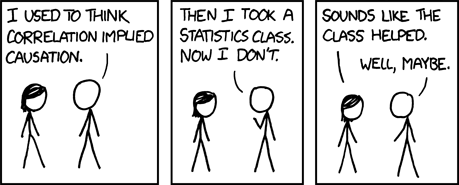
Study design shapes what we can learn and how confident we can be in the answers. When you hear about a new finding in the news, one of the first questions worth asking is: what kind of study was this? An observational study suggesting a link between two things is very different from a randomized trial proving one causes the other.
Next up: the key players in clinical research, from sponsors to investigators to the often-unsung coordinators who keep everything running.
 Amanda Hughes LeFranc